
Most organisations already have ideas for using AI. They come from leadership discussions, internal initiatives, technology vendors explaining how AI will transform an industry, conference talks, social media, and endless headlines about what is coming next.
The problem is that very little of this feels real. It rarely feels grounded in the day-to-day reality of your own business. The examples sound impressive, but they don’t clearly map to your goals, your constraints, or the challenges your teams are actually dealing with.
Successful use of AI (like any other technology) only happens when it is applied to a clearly identified business challenge, goal, objective or missed opportunity. Without that clarity, organisations struggle to define impact. Stakeholders remain unconvinced. Conversations become abstract. Progress slows or stops altogether.
This is how organisations end up talking a lot about AI, experimenting in pockets, and feeling uncertain about where real value comes from.
Not Every Idea Is A Use Case
A valid AI use case is defined by the business problem it solves and the impact of solving it. At Koshima, a use case only counts when it meets three clear conditions.
A Clear Business Problem
The use case must address a specific goal, challenge or missed opportunity that exists and impacts Time, Resources, Money, Experiences
A Defined Business Impact
The clear value of solving the problem in practical terms. Time saved, costs avoided, risks reduced and experiences improved.
A Realistic Path Forward
There is a clear, prioritised and plausible way to move from today’s reality to a known defined better outcome without relying on assumptions.
We identify your goals, challenges and missed opportunities, then confirm what qualifies as a valuable AI use case.
A Structured Approach To Clarity
Clarity comes from asking the right questions in the right order. Our approach to use case identification is guided by design thinking and our TIME framework which helps us define business impact and business value.
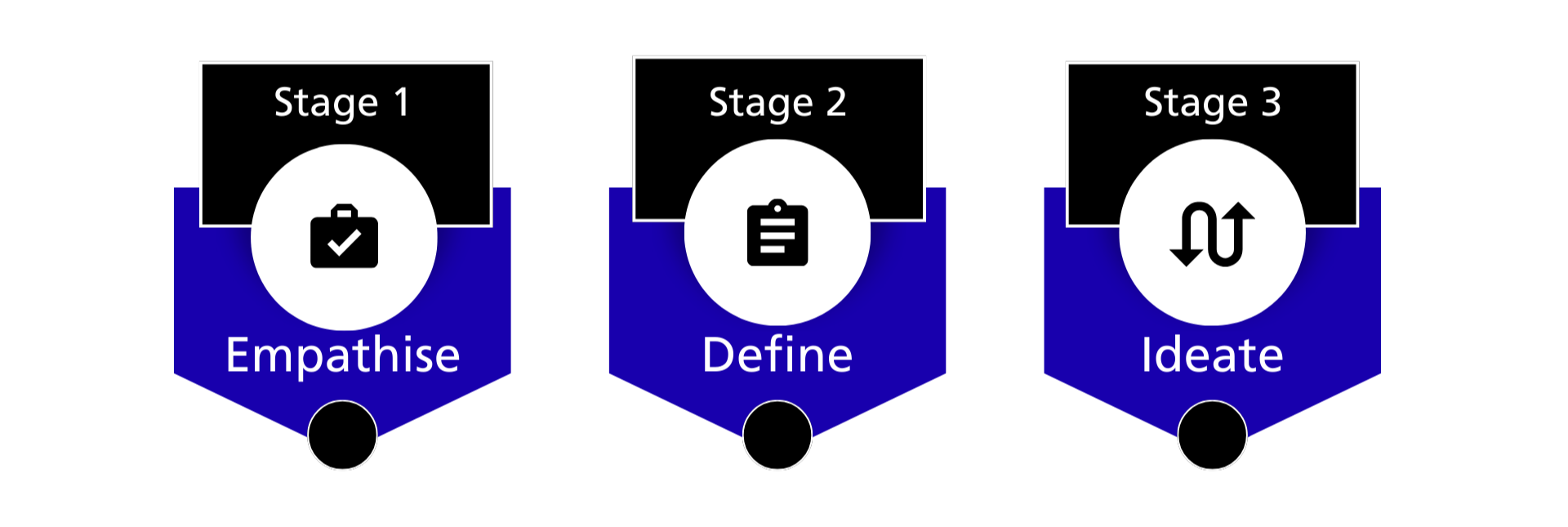

Start With Understanding
We begin by understanding what is really happening inside your business. That means understanding goals, pressures, constraints and where processes are breaking down. We focus on how work actually gets done, not how it is supposed to happen on paper. This creates a shared picture of reality that everyone can align around.

Impact & Value
Once challenges and opportunities are visible, we use our TIME framework to define their impact. We look at time lost or saved, effort involved, financial implications, and the experience of people affected. This turns vague ideas into clearly defined problems with measurable importance.

Set Out AI Where Fits
Only after impact is understood do we define where AI can meaningfully add value.Sometimes AI is part of the answer. Sometimes something else delivers more value. Our role is to help you see the difference clearly, without bias toward tools or vendors.
Prioritised Use Cases
You get a clear set of use cases that are relevant to your organisation, prioritised by business impact & defined value.
Defined Business Value
Each use case defined by the problem it addresses and value of solving it, creating confidence in why it is worth pursuing.
Shared Alignment
A common understanding across stakeholders of what matters most, reducing friction and making future decisions easier.
Setting Expectations Clearly
Use case identification is not about selling technology. It is not an implementation exercise, a vendor selection process or a commitment to build anything.
We do not arrive with predefined solutions, preferred tools or a hidden agenda to move you toward delivery work. Our role is to help you think clearly and decide deliberately.
Sometimes that means confirming where AI can add value. Other times it means recognising that a different change would have a greater impact. Both outcomes are valid.
The purpose of this work is confidence, not momentum for its own sake.
Ready to bring clarity to your AI initiatives?
If your organisation has AI ideas but lacks confidence in where to focus, use case identification creates the clarity needed to move forward deliberately.
Start A Conversation